
Introduction
The debate between modern streaming solutions and traditional cable television has never been more relevant than it is in 2025. With household budgets tightening and entertainment options expanding at an unprecedented rate, millions of viewers around the world are asking themselves one fundamental question: is it time to cut the cord? At the center of this conversation sits Krooz TV, a service that has steadily grown in popularity among cord-cutters who are searching for a smarter, more flexible way to consume television content. On the other side of the ring stands traditional cable TV — a decades-old infrastructure that once dominated living rooms globally but is now facing its most serious challenge yet. Krooz TV and cable TV represent two fundamentally different philosophies when it comes to how television content is delivered, priced, and consumed. Understanding the differences between these two options is not just about technology — it is about lifestyle, budget, and what you truly value in a home entertainment experience. This article takes a detailed, objective look at both sides of the debate, examining everything from cost and content availability to setup complexity and reliability. Whether you are a longtime cable subscriber considering a switch or a newcomer trying to decide which direction to go, this guide will give you the balanced information you need to make a confident, well-informed decision in 2025.
What Is Krooz TV and How Is It Different from Cable TV?
To properly compare the two, it is important to first understand what each service actually is and how each one works at a fundamental level. Krooz TV is an Internet Protocol Television service, meaning it delivers live television channels, movies, and on-demand content through an internet connection rather than through a coaxial cable or satellite dish. Subscribers receive login credentials — typically an M3U URL or Xtream Codes login — which they use with a compatible IPTV player app on devices such as Amazon Firestick, Smart TVs, Android phones, or computers. The content is streamed in real time over your broadband connection, giving you access to potentially thousands of channels from around the world at any given moment. Traditional cable TV, by contrast, operates through a physical infrastructure of coaxial cables that run directly to your home. A cable provider installs a set-top box or cable card in your residence, and you receive a predetermined package of channels based on the subscription tier you have purchased. The signal is transmitted directly through the cable line rather than over the internet, which historically gave cable TV an edge in terms of reliability and picture consistency. However, the rigid package structure, long-term contracts, and escalating monthly bills have become increasingly difficult for consumers to justify in an era when flexible, internet-based alternatives like Krooz TV are readily available. The core philosophical difference between the two is one of control. With cable TV, the provider dictates what channels you receive, how much you pay, and for how long you are locked into your contract. With Krooz TV, the power shifts significantly toward the consumer, who can choose their subscription tier, select a compatible app, and access content on virtually any screen in the household. This fundamental shift in control is a major reason why IPTV services have seen explosive growth in recent years, with millions of households making the switch globally.
Cost Comparison: Krooz TV vs Cable TV in 2025
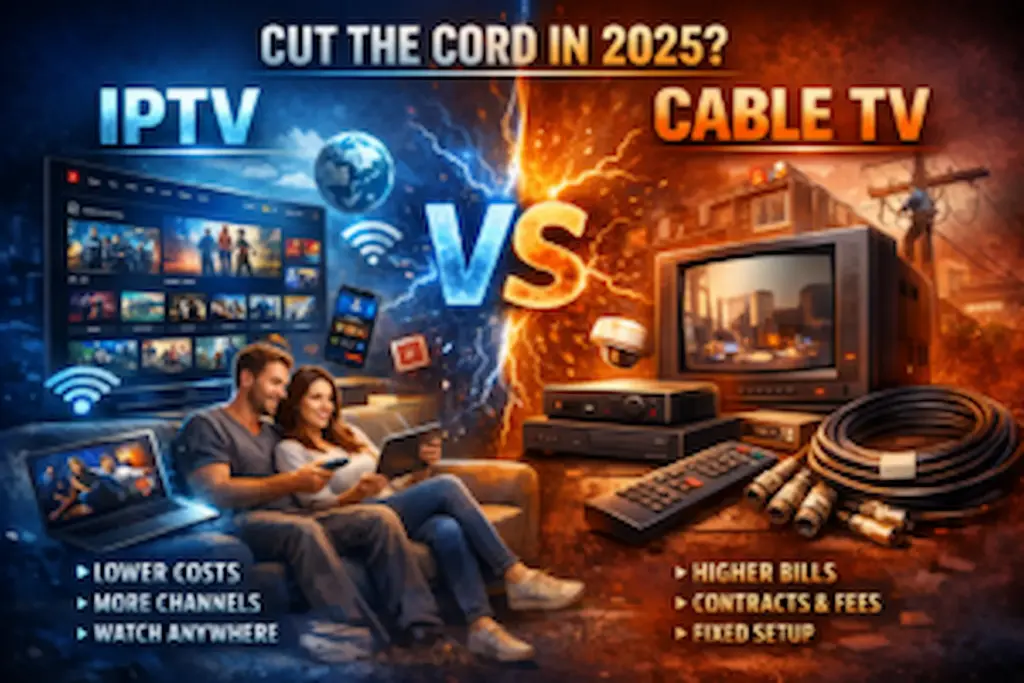
One of the most compelling arguments in favour of Krooz TV over traditional cable TV is the dramatic difference in cost. In 2025, the average monthly cable TV bill in the United States sits somewhere between $80 and $150, depending on the package, region, and provider. This figure often does not include additional fees for equipment rental, installation, regional sports packages, premium channels like HBO or Showtime, or DVR service — costs that can push the total monthly bill well above $200 for many households. Krooz TV and similar IPTV services, on the other hand, are typically available at a fraction of this cost. Most IPTV subscription plans range from approximately $12.99 to $52.99 per month, depending on the number of connections, the size of the channel library, and whether VOD content is included. Some providers offer even more competitive pricing for quarterly or annual subscriptions, bringing the effective monthly cost down further. When you factor in the absence of equipment rental fees, installation charges, and long-term contract penalties, the financial case for IPTV becomes very difficult to argue against. It is important to note, however, that the cost comparison is not entirely one-sided. With cable TV, you are typically paying for a service that includes guaranteed customer support, technical assistance, and a certain level of service reliability backed by a formal service agreement. IPTV services, while significantly cheaper, may vary in the quality and responsiveness of their customer support, and service interruptions may not always be resolved as quickly as they would be with a major cable provider. Additionally, to use an IPTV service effectively, you will need a sufficiently fast and stable internet connection, which is an ongoing cost that cable TV subscribers may not always require to the same degree. When calculating the true cost of switching to Krooz TV, it is worth accounting for your internet bill as part of the overall equation.
Channel Selection and Content Availability
When it comes to sheer volume of content, Krooz TV holds a significant advantage over most traditional cable TV packages. A typical cable TV subscription, even at a mid-to-high tier price point, may offer somewhere between 150 and 500 channels, many of which are duplicates, shopping networks, or low-viewership niche channels that most subscribers rarely if ever watch. Premium channels and sports packages are almost always sold as expensive add-ons rather than being included in the base price. IPTV services like Krooz TV frequently offer access to thousands of channels spanning multiple countries and languages, often including international programming from Europe, the Middle East, Asia, Latin America, and beyond. This makes IPTV particularly attractive for expatriate communities and multilingual households who want access to content in their native language — something traditional cable providers have historically struggled to cater to affordably. In addition to live channels, most IPTV subscriptions include a VOD library containing thousands of movies and TV series that can be watched at any time, further expanding the overall content offering beyond what a standard cable package provides. That said, there are areas where traditional cable TV still holds its ground. Live sports broadcasting rights remain a complex and expensive area of the media landscape, and some major sporting events — particularly those exclusive to regional sports networks — may not always be reliably available through IPTV services. Cable TV providers have well-established contractual relationships with sports leagues and broadcasters, which can sometimes give them an edge when it comes to guaranteed access to high-profile live events. For die-hard sports fans, this is a consideration worth weighing carefully before making any decisions about switching services.
Reliability and Picture Quality
Reliability is one of the most frequently cited concerns among viewers considering a switch from cable TV to IPTV. Traditional cable TV has long been associated with a high level of reliability — barring severe weather conditions or physical damage to infrastructure, the signal is generally consistent and interruption-free. This consistency has been one of cable’s strongest selling points, particularly for households that use their television for news, live sports, and other time-sensitive content. Krooz TV and IPTV services in general are more dependent on external variables, most notably the quality and stability of your internet connection. If your broadband connection experiences congestion, drops, or speed fluctuations — whether due to your ISP, your home network, or peak usage times — your IPTV streams may buffer, freeze, or drop in quality. This is one of the genuine limitations of internet-based streaming compared to a dedicated cable signal. However, as broadband infrastructure has improved dramatically in most regions over the past few years, and with the widespread rollout of gigabit fiber internet in many areas, this gap has narrowed considerably. In terms of picture quality, IPTV services have made remarkable strides. Many IPTV providers now offer HD and 4K streams for a growing number of channels, often exceeding the picture quality available through standard cable packages which may still deliver some channels in standard definition. The key determinant of IPTV picture quality is your internet speed — with a sufficiently fast connection, the visual experience of streaming through Krooz TV can match or surpass what cable TV delivers. Cable TV, while reliable in signal delivery, is sometimes constrained by bandwidth limitations within its own infrastructure that can cap the quality of certain channels, particularly during high-traffic periods.
Device Compatibility and Flexibility
One area where Krooz TV and IPTV technology in general hold an undeniable advantage over traditional cable is device flexibility. Cable TV is inherently tied to a physical set-top box connected to a television in a fixed location. While some cable providers now offer companion apps that allow you to watch content on smartphones or tablets, these apps are often limited in functionality, riddled with restrictions, and not always well-reviewed by users. Krooz TV, by contrast, can be accessed on virtually any internet-connected device. Whether you are watching on a large 4K television via a Firestick or Android TV box, catching up on your favourite shows on a smartphone during your commute, or streaming on a laptop while travelling, your entire channel lineup and VOD library travels with you wherever you go. This level of portability and multi-device compatibility is something that traditional cable TV simply cannot match in its current form. Furthermore, IPTV services typically allow multiple simultaneous connections depending on your subscription plan, meaning that multiple members of a household can watch different content on different devices at the same time — often for the same monthly cost or with a modest upgrade to a multi-connection plan. With cable TV, each television in the house typically requires its own set-top box, each of which comes with an additional monthly rental fee, making multi-room setups considerably more expensive.
Setup and Ease of Use
Setting up traditional cable TV is a relatively passive experience for the consumer. A technician visits your home, installs the necessary hardware, and hands you a remote control. The interface is familiar and straightforward, and technical issues are handled by calling the provider’s customer support line. For less tech-savvy users, this simplicity and hands-off setup process is genuinely appealing. Setting up Krooz TV requires a somewhat more active role from the user, particularly during the initial configuration. You will need to choose and install a compatible IPTV player app, enter your subscription credentials, configure your EPG if applicable, and troubleshoot any issues that arise independently or through your provider’s support channels. While this process is straightforward for anyone with basic tech literacy, it can feel daunting to users who are not comfortable navigating device settings or installing third-party applications. Once the initial setup is complete, however, most users find IPTV interfaces to be intuitive and user-friendly. Apps like IPTV Smarters Pro and TiviMate offer clean, well-organized interfaces that make browsing channels and searching for content easy and enjoyable. The learning curve is real but short, and the majority of first-time IPTV users report feeling comfortable with the platform within a day or two of initial setup.
Contract and Commitment
One of the most significant differences between Krooz TV and traditional cable TV — and one that resonates strongly with modern consumers — is the matter of contracts and long-term commitments. Traditional cable TV providers are well known for locking customers into 12 to 24-month contracts, often with substantial early termination fees that can run into hundreds of dollars. Promotional pricing that seemed attractive at sign-up frequently reverts to much higher standard rates after an introductory period, leaving many subscribers feeling trapped by a service they can no longer justify at its full price. Krooz TV and most IPTV services operate on a far more flexible model. Subscriptions are typically available on a month-to-month basis, allowing subscribers to cancel at any time without penalty. Many providers also offer quarterly and annual plans at discounted rates for users who prefer a longer commitment, but these are generally optional rather than mandatory. This flexibility aligns well with the preferences of today’s consumers, who increasingly favour subscription models that give them the freedom to add, change, or cancel services according to their changing needs and budgets without fear of financial penalties.
Customer Support and After-Sales Service
Customer support is one area where traditional cable TV providers still hold a practical advantage for many users. Major cable companies maintain large customer service teams available via phone, online chat, and in-person service centers. While the quality of cable TV customer support is frequently criticized by subscribers, the infrastructure for getting help does exist and is generally accessible. Technical issues can often be resolved remotely or through a technician visit covered by the service agreement. Krooz TV and IPTV providers in general tend to operate with smaller teams and offer support primarily through online channels such as email, live chat, or social media. Response times can vary significantly between providers, and the level of technical expertise available may not always match that of a large cable company’s dedicated support department. When evaluating any IPTV service, it is worth researching the provider’s reputation for customer support through user reviews and community forums before committing to a subscription.
Krooz TV vs Cable TV: A Quick Comparison Summary
To bring the key differences into sharp focus, here is a side-by-side summary of how Krooz TV and traditional cable TV compare across the most important criteria:
- Monthly Cost: Krooz TV typically ranges from $12.99–$52.99/month. Cable TV averages $80–$150+/month.
- Channel Selection: Krooz TV offers +20000 channels including international content. Cable TV offers 150–500 channels with limited international options.
- Device Flexibility: Krooz TV works on Firestick, Smart TV, Android, iOS, PC, and more. Cable TV is primarily tied to a set-top box.
- Contract Requirement: Krooz TV is typically month-to-month with no long-term commitment. Cable TV often requires 12–24 month contracts.
- Setup Complexity: Krooz TV requires initial app configuration. Cable TV is set up by a technician.
- Reliability: Krooz TV depends on internet connection quality. Cable TV offers a dedicated, generally consistent signal.
- Picture Quality: Krooz TV supports HD and 4K where available. Cable TV quality varies by package and infrastructure.
- Customer Support: Krooz TV offers primarily online support. Cable TV provides multi-channel customer service.
- Portability: Krooz TV is fully portable across devices and locations. Cable TV is location-bound.
Frequently Asked Questions (FAQs)
Q: Can Krooz TV completely replace my cable TV subscription? For the majority of viewers, Krooz TV can serve as a comprehensive replacement for cable TV, offering a broader channel selection at a significantly lower cost. However, users who rely heavily on specific local channels or regional sports networks should verify that their preferred content is available through their IPTV provider before cancelling their cable subscription.
Q: Is Krooz TV legal to use? The legality of IPTV services depends on the licensing agreements held by the provider and the laws of the user’s country or region. Users are strongly advised to research the legal status of any IPTV service in their jurisdiction before subscribing and to ensure that the service operates with appropriate content licensing.
Q: What internet speed do I need to use Krooz TV effectively? A minimum of 10 Mbps is recommended for standard definition streams, 25 Mbps for HD content, and 50 Mbps or higher for 4K streams. A stable, consistent connection is more important than peak speed.
Q: Will I miss any channels by switching from cable to Krooz TV? This depends entirely on your viewing habits. Krooz TV typically offers a very extensive channel lineup, but specific local broadcast channels or regionally exclusive content may not always be available. It is advisable to request a trial or review the full channel list before making the switch.
Q: Can I use Krooz TV while travelling abroad? Yes, one of the significant advantages of IPTV is that it can be accessed from any location with a stable internet connection. A VPN may be required in some countries to bypass regional restrictions.
Q: Does Krooz TV support a DVR or recording feature? This depends on the IPTV player app you use. Some apps like TiviMate offer a DVR-style catch-up feature, and some IPTV providers include a time-shift or catch-up TV function within their subscription. Check with your specific provider and app for availability.
Conclusion
The comparison between Krooz TV and traditional cable TV in 2025 tells a story that increasingly favours the modern, internet-based approach to television. Krooz TV offers a compelling combination of lower cost, greater content variety, superior device flexibility, and freedom from long-term contracts — advantages that are difficult to overlook in today’s streaming-first media landscape. Traditional cable TV, while still offering genuine strengths in reliability and customer support infrastructure, is struggling to justify its premium price tag in the face of such capable and affordable alternatives. Ultimately, the right choice depends on your individual priorities. If cost savings, flexibility, and access to international content are your primary concerns, Krooz TV and IPTV services in general represent a smart, future-focused choice. If you prioritize maximum reliability, hands-off setup, and access to specific local or regional programming backed by formal customer support, cable TV may still meet your needs for the time being. However, the trajectory is clear — IPTV is not just a trend. It is the direction in which television consumption is decisively heading. If you are ready to explore what Krooz TV has to offer, take the time to research available subscription plans, read user reviews, and if possible, request a short trial period before fully committing. An informed decision made today can save you hundreds of dollars over the course of the year while delivering a richer, more flexible entertainment experience than cable TV has traditionally been able to provide.