
Introduction: How Television Is Being Reinvented
The way people consume Television content has shifted dramatically over the last decade. Traditional cable and satellite subscriptions, once considered the gold standard of home entertainment, are steadily losing ground to more flexible, internet-based alternatives. At the heart of this transformation is IPTV — Internet Protocol Television — a technology that delivers live TV, on-demand content, and premium channels through a broadband internet connection rather than conventional broadcast signals. Among the growing number of providers navigating this space,Krooz TV has emerged as a notable name in conversations about next-generation streaming. As cord-cutting becomes a mainstream lifestyle choice rather than a niche preference, understanding what IPTV is, how it works, and what platforms like Krooz TV bring to the table has never been more relevant. This article explores the evolution of IPTV technology, the shifting landscape of digital television, and how Krooz TV fits into the broader story of where streaming is headed. Whether you are a tech-savvy early adopter or simply someone looking for a smarter way to watch TV, this guide will give you a well-rounded, objective view of the IPTV revolution unfolding right now.
What Is IPTV and Why Is It Gaining Momentum?
IPTV stands for Internet Protocol Television, and while the term may sound technical, the concept is straightforward. Instead of receiving television signals through a satellite dish or cable wire, IPTV streams content directly over your internet connection. This means you can watch live sports, news, movies, TV series, and international channels on virtually any internet-connected device — from your smart TV and laptop to your smartphone or tablet. The momentum behind IPTV is not accidental. Several converging factors have created the perfect environment for its rise. First, global broadband infrastructure has improved enormously, with high-speed fiber and 5G connections now available in more regions than ever before. Second, consumer expectations have evolved. Today’s viewers demand flexibility — the ability to pause, rewind, record, and watch on their own schedule. Third, the cost of traditional cable packages has continued to climb while the value proposition has remained stagnant, pushing millions of households toward more affordable alternatives. According to industry analysts, the global IPTV market was valued at well over $60 billion in recent years and is projected to grow at a compound annual growth rate exceeding 15% through the end of the decade. This is not a passing trend. It is a fundamental restructuring of how television content is distributed and consumed. Platforms offering IPTV services are multiplying, competition is intensifying, and end users are the ultimate beneficiaries as quality improves and prices remain competitive.
The Evolution of Television: From Antenna to Algorithm
To truly appreciate where IPTV is heading, it helps to understand how far television technology has already come. The journey from rooftop antennas to algorithm-driven streaming platforms spans less than a century but represents one of the most dramatic technological leaps in human history. The earliest television sets received over-the-air broadcasts from local transmitters. Reception was limited, picture quality was poor by modern standards, and programming choices were minimal. Cable television changed the game in the 1980s and 1990s by delivering dozens, then hundreds, of channels through a physical wire. Satellite TV expanded access to rural and remote areas that cable infrastructure could not reach. For a time, both models thrived. Then came the internet. Streaming pioneers like Netflix demonstrated in the mid-2000s that delivering video content over a broadband connection was not only possible but preferable for many users. YouTube made video-on-demand a daily habit for billions. Smart TVs began integrating app ecosystems. The smartphone became a personal entertainment hub. By the 2010s, the writing was on the wall for traditional broadcast models — the question was no longer whether the internet would become the primary medium for television, but when. IPTV represents the full maturation of that shift. Unlike early streaming services that focused exclusively on on-demand libraries, modern IPTV combines live broadcast television, time-shifted media, and video-on-demand into a single, unified platform. It replicates everything a cable subscription offered — and then adds features cable never could.
Krooz TV: An Overview of Its Place in the Market
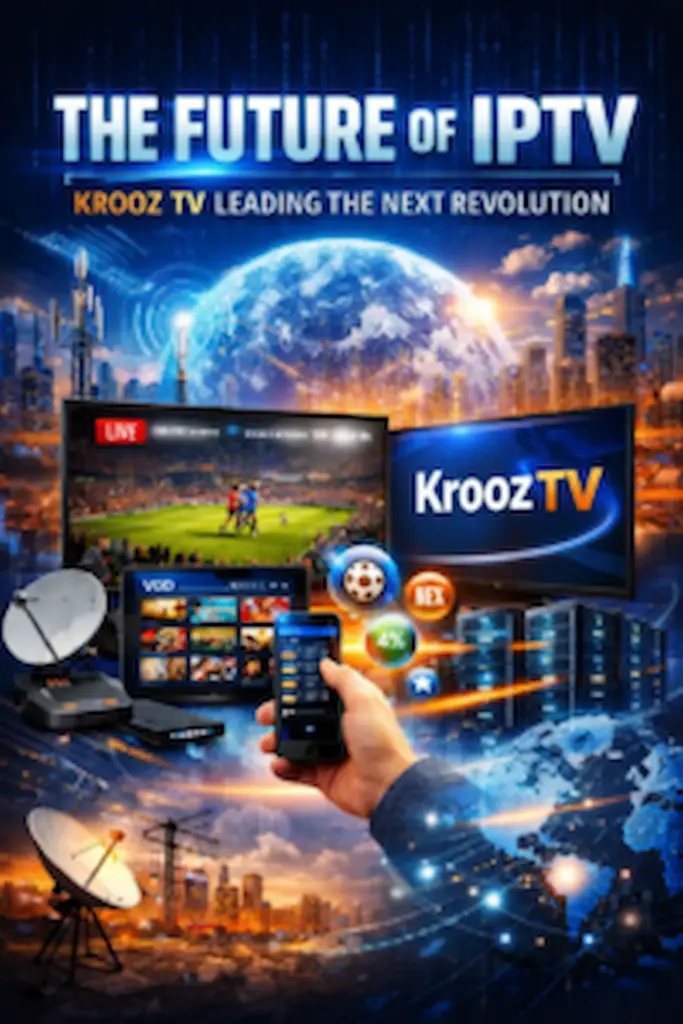
Within the IPTV ecosystem, Krooz TV has carved out a presence that reflects the broader demands of today’s streaming audience. The platform positions itself as a comprehensive IPTV solution, offering access to a wide range of live channels, on-demand content, and international programming options. What makes Krooz TV a subject of interest in discussions about the future of streaming is not just the volume of its content library but its approach to accessibility and device compatibility. Modern IPTV users do not want to be tethered to a single screen. They expect seamless experiences across multiple devices and operating systems. Krooz TV, like other competitive providers in this space, has oriented its service delivery around this multi-device expectation. It is worth noting that the IPTV market is populated with numerous providers, ranging from well-established platforms to newer entrants. Krooz TV occupies a space among services that cater to users seeking alternatives to traditional pay-TV while maintaining access to premium live content. As with any service in this evolving market, prospective users are encouraged to research thoroughly, verify content licensing in their region, and ensure the service aligns with their viewing habits and legal requirements in their jurisdiction. The growing interest in platforms like Krooz TV is symptomatic of a larger appetite for IPTV services that combine breadth of content with ease of use and competitive pricing — a combination that legacy providers have historically struggled to deliver.
Key Features That Define a High-Quality IPTV Service
Understanding what separates a quality IPTV provider from a mediocre one is essential for any consumer navigating this market. Not all IPTV services are created equal, and the differences can be significant in terms of streaming reliability, content variety, and user experience. Here are the defining characteristics of a premium IPTV service:
Extensive Channel Lineup A strong IPTV service should offer a comprehensive selection of live channels spanning multiple categories — news, sports, entertainment, kids’ programming, documentaries, and international content. The ability to access channels from different countries and in different languages is a major selling point for globally minded viewers and expatriate communities.
High-Definition and 4K Streaming Picture quality matters. Top-tier IPTV platforms prioritize HD and 4K content delivery, ensuring that sports events, films, and live broadcasts are rendered with the clarity viewers expect in the era of modern display technology. Buffering and pixelation are hallmarks of lower-quality services and are deal-breakers for serious users.
Electronic Program Guide (EPG) An EPG functions like a digital TV guide, showing users what is currently airing and what is scheduled for upcoming broadcast. This feature dramatically improves navigation and allows users to plan their viewing in advance, a key feature that makes IPTV feel as intuitive as traditional cable.
Video on Demand (VOD) Library Beyond live television, a robust VOD library gives users access to movies, series, and archived content whenever they choose. The quality and breadth of the VOD library is often what distinguishes premium providers from basic ones.
Multi-Device Compatibility Whether a user prefers watching on a smart TV, Amazon Fire Stick, Android box, iOS device, Windows PC, or MAG box, a modern IPTV service should function seamlessly across these platforms. Krooz TV, consistent with industry best practices, supports a broad range of devices, reflecting the multi-screen reality of contemporary media consumption.
Reliable Uptime and Server Stability Perhaps the most critical technical factor is uptime. A service that drops streams during a critical sports match or freezes during a live news broadcast quickly loses user trust. Providers that invest heavily in server infrastructure and redundancy deliver a noticeably superior experience, particularly during peak viewing hours.
Customer Support Responsive and knowledgeable customer support is often overlooked in the evaluation process but becomes critically important when technical issues arise. IPTV services that offer multi-channel support — including live chat, email, and detailed help documentation — consistently receive higher user satisfaction ratings.
The Technology Powering Modern IPTV Platforms
Behind the seamless streaming experience that users enjoy lies a sophisticated technological infrastructure. Understanding this infrastructure helps explain why IPTV quality can vary so dramatically from one provider to another. At its core, IPTV delivery relies on three fundamental technologies: unicast streaming, multicast streaming, and content delivery networks (CDNs). Unicast streaming sends a unique stream to each individual user, which is ideal for on-demand content but can be bandwidth-intensive at scale. Multicast streaming sends a single stream that multiple users can access simultaneously, making it far more efficient for live television broadcasts where thousands or millions of viewers may be watching the same channel at once. CDNs play a pivotal role in ensuring low-latency, high-quality delivery regardless of where the user is located. By distributing server infrastructure across multiple geographic locations, CDNs reduce the physical distance that data must travel, resulting in faster load times and more stable streams. Leading IPTV providers leverage CDNs extensively, and the quality of a provider’s CDN partnerships often directly correlates with the viewing experience they can deliver. Adaptive bitrate (ABR) streaming is another critical technology in the modern IPTV toolkit. ABR dynamically adjusts the quality of a video stream in real time based on the viewer’s available internet bandwidth. If your connection slows temporarily, ABR reduces the stream quality to prevent buffering rather than stalling the video entirely. When bandwidth recovers, quality is automatically restored. This technology has been central to making IPTV viable across varying connection speeds worldwide.
IPTV and the Global Cord-Cutting Movement
The cord-cutting movement — the mass migration of consumers away from traditional cable and satellite subscriptions — has accelerated faster than most industry analysts predicted. In the United States alone, the number of pay-TV subscribers has declined by tens of millions over the past several years, a trend mirrored in Europe, Asia, and Latin America. IPTV is the primary beneficiary of this exodus. While pure streaming services like Netflix and Disney+ capture the on-demand market, IPTV uniquely fills the gap left by cable’s departure: live television. For sports fans who need access to live matches, news viewers who follow breaking events in real time, and households that still rely on linear programming schedules, IPTV offers an internet-native answer to cable’s legacy capabilities. Krooz TV and similar platforms have tapped directly into this demand, positioning themselves as complete cable replacements rather than mere supplements to existing streaming subscriptions. This framing is important — it reflects a maturation in how IPTV providers market and engineer their services. Early IPTV was often seen as a technically complex, niche solution for early adopters. Today’s IPTV is designed for mainstream consumption. The global cord-cutting movement has also driven innovation in IPTV hardware. Streaming sticks, smart TV apps, and IPTV set-top boxes have become more affordable and user-friendly, lowering the barrier to entry for consumers who may not be technically confident. This democratization of IPTV hardware has opened the market to demographics that were previously unreachable.
International Content and the Diaspora Audience
One of IPTV’s most underappreciated strengths is its ability to deliver international content to diaspora communities around the world. For millions of people living outside their home countries, access to familiar news broadcasts, sports leagues, soap operas, and cultural programming in their native language is both practically valuable and emotionally significant. Traditional cable providers have historically served this need poorly, offering a handful of international packages at premium prices with limited channel selections. IPTV disrupts this dynamic entirely. Platforms like Krooz TV that include extensive international channel lineups address a genuine market need, offering Arabic, French, Spanish, Portuguese, Hindi, Urdu, and dozens of other language options alongside mainstream English-language content. This international dimension of IPTV is not just a feature — it is increasingly central to the value proposition of premium providers. As global migration patterns evolve and multicultural households become more common in major cities worldwide, the demand for culturally diverse content libraries will only intensify. IPTV is uniquely positioned to meet this demand in ways that cable and satellite television structurally cannot
Challenges Facing the IPTV Industry
No honest assessment of IPTV’s future would be complete without acknowledging the challenges and complexities that the industry faces. While the growth trajectory is impressive, there are legitimate obstacles that both providers and consumers must navigate.
Content Licensing and Legality Content licensing is among the most significant issues in the IPTV space. Not all IPTV services operate with proper licensing agreements from content rights holders. The distinction between licensed, legal IPTV services and unlicensed services is critically important for consumers to understand. Using unlicensed IPTV services may expose users to legal risk depending on their jurisdiction and may support operations that harm content creators and rights holders. Consumers should always verify that an IPTV provider operates with appropriate licensing before subscribing.
Service Reliability Variability The IPTV market includes providers of vastly different quality levels. Some services suffer from chronic buffering, channel outages, or sudden shutdowns that leave subscribers without the content they paid for. Due diligence — reading independent reviews, testing trial periods, and researching a provider’s track record — is essential before committing to a subscription.
Internet Dependency IPTV is entirely dependent on internet connectivity. In areas with unreliable or slow broadband infrastructure, the IPTV experience can be frustrating. Power outages and ISP disruptions that leave cable users unaffected will also take IPTV services offline. As internet infrastructure continues to improve globally, this challenge will diminish, but it remains a relevant consideration for certain markets today.
ISP Throttling Some internet service providers throttle — or intentionally slow down — streaming traffic, particularly from video services that consume significant bandwidth. This can degrade IPTV quality without the user understanding the root cause. Using a VPN in conjunction with IPTV can sometimes mitigate throttling, though users should verify whether VPN use is permitted by their IPTV provider and ISP.
The Future of Krooz TV and the Broader Streaming Landscape
Looking ahead, the trajectory for IPTV is unambiguously upward. Several technological and cultural forces will continue to accelerate adoption and drive innovation within the space. The global rollout of 5G networks is perhaps the single most transformative force on the horizon for IPTV. 5G’s combination of ultra-low latency and multi-gigabit speeds will make high-quality IPTV streaming viable on mobile devices in ways that 4G simply cannot support. Live sports streaming in 4K without buffering, even on a smartphone away from home Wi-Fi, will become a standard expectation rather than a premium novelty. Artificial intelligence and machine learning are already beginning to reshape the IPTV user experience. AI-driven recommendation engines that learn from individual viewing habits, automated content curation, predictive buffering management, and real-time subtitle generation are among the AI applications being integrated into next-generation IPTV platforms. The result will be a deeply personalized television experience that adapts to the viewer rather than requiring the viewer to adapt to it. Cloud DVR functionality — the ability to record live television to cloud storage and access recordings from any device — is another feature becoming standard across premium IPTV services. This capability fundamentally changes the relationship between viewers and live television, eliminating the tyranny of fixed schedules in a way that traditional DVR hardware never fully accomplished. For Krooz TV specifically, its relevance in this evolving landscape will depend on its ability to keep pace with these technological developments, maintain content quality and variety, expand its device compatibility, and build trust with consumers through transparent operation and reliable service. The IPTV providers that thrive in the next decade will be those that combine technological sophistication with genuine user-centricity. The competitive landscape will also intensify. Major technology companies, telecommunications giants, and media conglomerates are all making strategic moves into the live streaming and IPTV space. This influx of well-resourced competitors will raise quality standards across the board and likely accelerate innovation at a pace that independent providers will need to match.
How to Choose the Right IPTV Service for Your Needs
Given the crowded and varied IPTV market, choosing the right service is a decision that benefits from careful consideration. Here is a practical framework for evaluating any IPTV provider, including Krooz TV:
- Define your content priorities: Are you primarily interested in live sports, international channels, VOD libraries, or a combination? Different providers excel in different areas.
- Verify licensing and legality: Ensure the provider operates legally in your jurisdiction and holds appropriate content rights. This protects you and ensures service continuity.
- Test before committing: Most reputable IPTV providers offer trial periods. Use them to evaluate streaming quality, channel availability, and app stability on your preferred devices.
- Read independent reviews: Look for reviews on technology forums, Reddit communities, and independent review platforms rather than relying solely on provider-published testimonials.
- Assess customer support: Contact support with a pre-subscription question to gauge responsiveness and competence. Good support is a strong indicator of overall service quality.
- Evaluate device compatibility: Confirm the service works on all the devices you intend to use, including smart TVs, streaming sticks, and mobile devices.
- Consider internet requirements: Check the minimum broadband speed recommended for HD or 4K streaming and ensure your connection meets or exceeds that threshold.
Frequently Asked Questions (FAQs)
What is Krooz TV and how does it work? Krooz TV is an Internet Protocol Television service that delivers live TV channels, on-demand content, and international programming over a broadband internet connection. It works by streaming video data through your internet connection to a compatible device such as a smart TV, smartphone, tablet, or streaming stick, bypassing the need for traditional cable or satellite infrastructure.
Is IPTV legal to use? IPTV technology itself is entirely legal. However, the legality of a specific IPTV service depends on whether it holds proper licensing agreements for the content it distributes. Legal IPTV services operate with appropriate rights clearances. Consumers should always verify that the provider they choose operates within the legal framework of their country.
What internet speed do I need for IPTV streaming? For standard definition streaming, a minimum of 5 Mbps is generally sufficient. For HD content, 10–25 Mbps is recommended. For 4K streaming, speeds of 25 Mbps or higher are advisable. A stable, consistent connection is often more important than raw speed, so a wired ethernet connection is preferable to Wi-Fi for IPTV where possible.
Can I use Krooz TV on multiple devices? Most IPTV services, including Krooz TV, support multi-device access. The specific number of simultaneous streams permitted typically depends on the subscription plan you choose. Check the provider’s terms for details on concurrent stream allowances.
How does IPTV compare to traditional cable TV? IPTV generally offers greater flexibility, lower cost, wider content variety, and multi-device access compared to traditional cable. Cable has historically had an advantage in reliability and simplicity, though modern IPTV services have closed this gap significantly, particularly in areas with strong broadband infrastructure.
What devices are compatible with IPTV services? Modern IPTV services are compatible with a broad range of devices including Android and iOS smartphones and tablets, smart TVs from brands like Samsung and LG, Amazon Fire Stick, Roku, Apple TV, Android TV boxes, MAG set-top boxes, and web browsers on desktop computers.
Can IPTV replace my cable subscription entirely? For many users, yes. A comprehensive IPTV service that includes live local and national channels, sports, international content, and a VOD library can function as a complete cable replacement. Whether it does so effectively for you depends on your specific viewing habits and content requirements more…
Conclusion: The Revolution Is Already Here
The future of television is not approaching — it has already arrived. IPTV has moved from the margins of media consumption to its center with remarkable speed, driven by technological advancement, shifting consumer behavior, and the simple economic logic of delivering more value at lower cost. Platforms like Krooz TV are part of this broader revolution, representing the new generation of television services built for an internet-first world. For viewers, this is an era of unprecedented choice and empowerment. The ability to access thousands of channels and a vast on-demand library from any device, anywhere, at any time, for a fraction of the cost of traditional cable is not a future promise — it is today’s reality. Understanding the technology, evaluating providers carefully, prioritizing legality and reliability, and staying informed about emerging developments will ensure that your IPTV experience is both rewarding and sustainable. The television revolution is well underway. The question is no longer whether to participate, but how to navigate it wisely. Whether you choose Krooz TV or another provider in this dynamic space, the shift toward internet-delivered television is one of the most consumer-friendly transformations in the history of media — and it is only accelerating.